The question I hear most from Triangle homeowners this fall is a short one: "Should I wait for rates to drop before I sell?" It makes sense on its face. If the 30-year fixed rate is hovering near 6.9%, why rush into a move that locks a mortgage payment in at today's rates?
Here is the honest answer: for most sellers, waiting for rates is the wrong way to make this decision. Your timeline should be driven by what your household actually needs, the growing family, the new job, the downsizing, the neighborhood change. Rates are part of the math. They should not be the whole equation.
Let's walk through where rates and the Triangle market actually stand in September 2026, what waiting truly costs you, and why the fee you can control matters more than the rate you cannot.
Where rates and the Triangle market actually stand
The 30-year fixed mortgage rate has been hovering near 6.9% through September 2026, with the 15-year rate in the low 6s. No one can honestly promise where rates go next. Forecasts this year have swung in both directions more than once, and treating any single prediction as a plan is a gamble, not a strategy.
The Triangle market, meanwhile, has settled into a different rhythm than the sprint of a few years ago. Recent data shows inventory up roughly 15% year over year, days on market climbing into the 30s, and median prices roughly level across many towns. Raleigh's median sale price is running below where it was a year ago, and about one in four Triangle sellers has cut their asking price at least once. Homes are typically closing at about 98% of list, and buyers are increasingly asking for concessions rather than just bidding in heat.
None of that is doom. It is balance. And in a balanced market, the seller who keeps the most equity wins, because the market is not going to hand it back through appreciation.
The cost of waiting never shows up as one big number
Waiting feels free because it feels like doing nothing. It isn't. Every month you hold off, you keep paying the mortgage, property taxes, insurance, and upkeep on a home you already know you are leaving. Those dollars add up quietly, and they buy you nothing except another month in a situation you wanted to change.
- The benefit of your move, the extra bedroom, the better commute, the lower-maintenance home, delays by one more month for every month you wait
- Carrying costs keep flowing on a house you are leaving, which is money that could be building equity in the next one
- Prices are not trending sharply upward right now, so there is no strong case that waiting a season gets you a bigger sale; balanced markets reward sellers who price smart and market well, not sellers who wait
If your reason for moving is real, you don't need a rate drop to justify it. You need a plan that keeps the most equity, prices the home right, and markets it like the stakes are high. That plan is available today, at today's rates, with today's market.
You can't control rates. You can control fees.
Here is the part of the math that rarely gets attention. Mortgage rates are set by the market and move on their own schedule. The fees attached to your sale, however, are largely within your control, and they hit you all at once, in cash, out of your equity.
On a $450,000 home, a traditional commission structure can total around $27,000, and roughly half of that, about $13,500, is the listing side of the fee. On a $500,000 home the same listing side runs about $15,000. That is money leaving your pocket on the day you close, no matter what the rate does next month.
Traditional Sale
-$13,500+
Typical listing-side commission on a $450,000 Triangle home sold the conventional way. On a $500,000 sale it is about $15,000.
Sold Zero Commission
$0
Listing-side commission when you buy your next home through our team. Same premium marketing, none of the listing fee.
Commissions are fully negotiable and not set by law, so exact numbers vary by home and market. But the direction is consistent: in a traditional sale, five figures walks out of your equity at closing. With Sold Zero Commission, that line item is zero. See the step-by-step program details for exactly how the mechanics work.
What keeping $13,500+ actually does for your next move
The most interesting thing about a zero listing commission is not the fee you avoid. It is what that money becomes when it stays with you.
- A rate buydown: applied as discount points on your new mortgage, $13,500 can lower your note rate for the life of the loan, which is the closest thing to controlling your rate that exists
- A smaller loan: every dollar you finance less is a dollar you don't pay interest on for 30 years
- Closing and moving costs: covered from your equity instead of your savings account
- A margin of comfort: the difference between the home that fits your life and the one that fits your budget a little too tightly
Sellers who fear the rate often find that the fee is the bigger line item they can actually change. Zero listing commission turns that line item into buying power in your next transaction. The full $15,000 math is broken down in detail here.
Why zero commission matters more in a balanced market
In a white-hot market, a seller can lose $15,000 to fees and still come out ahead, because appreciation covered it within months. That is not the market of September 2026. With homes closing at about 98% of list, with one in four Triangle sellers cutting price, and with buyers asking for concessions, the margin for error is thin. Appreciation is not doing the heavy lifting anymore.
That changes the calculation. Every dollar of fee you eliminate is a dollar of price you don't have to negotiate away. A balanced market rewards the seller who arrives with less to lose: less fee drag, better marketing, sharper pricing. That is exactly the position Sold Zero Commission puts you in.
It also matters on the buy side. When buyers hold leverage, a seller who keeps their equity has more room to negotiate, to offer the concession that wins the house, to move with confidence instead of from scarcity. The commission rule changes of the last two years made the buy side of the equation different too, and the current Triangle market reports show what your price range is doing right now.
The questions sellers are actually asking
Won't rates drop and make waiting worth it?
No one knows. Rates have been near the high 6s for months, and forecasts have swung both ways all year. Waiting on a prediction means paying your current mortgage, taxes, and upkeep in the meantime, and delaying the move you need. If your reasons for moving are real, they don't expire when a rate number changes. And if rates do ease after you buy, refinancing is a well-trodden path; the equity you keep from a zero-commission sale makes that option easier to use.
Am I paying more by moving at a higher rate?
Your new rate is a monthly cost. Seller's fees are a one-time check out of your equity. Both matter, but the fee is the part you can control and the part that hits you all at once. On a $450,000 sale, saving roughly $13,500 on the listing side can cover a meaningful rate buydown or thousands of dollars of interest in the early years of a new mortgage. Run both numbers side by side and most sellers find the fee is the bigger line item they can actually change.
Isn't zero commission only for people who can time a sale and a purchase perfectly?
No. The 90-day window starts at your sale closing, not at signing, and one team manages both sides of your move, so the search for your next home starts as soon as your listing goes live. If you don't buy within the window, standard listing commissions apply. It is all laid out in writing up front. See the FAQ page for more quick answers.
The Bottom Line
Rates are not the boss of your move. Your life is. A rate around 6.9% is a number you plan around, not a wall you wait behind, and no one can promise you a better one. Meanwhile, the fee you can control is real, it is five figures, and it comes out of your equity the day you close.
The September 2026 Triangle market rewards sellers who keep what they earn, price like the market has shifted, and market like the stakes are high. Because they are. Zero listing commission is how you keep $13,500 to $15,000+ of your equity for the next chapter of your life instead of handing it to a fee schedule.
Save Thousands. Keep Your Equity.
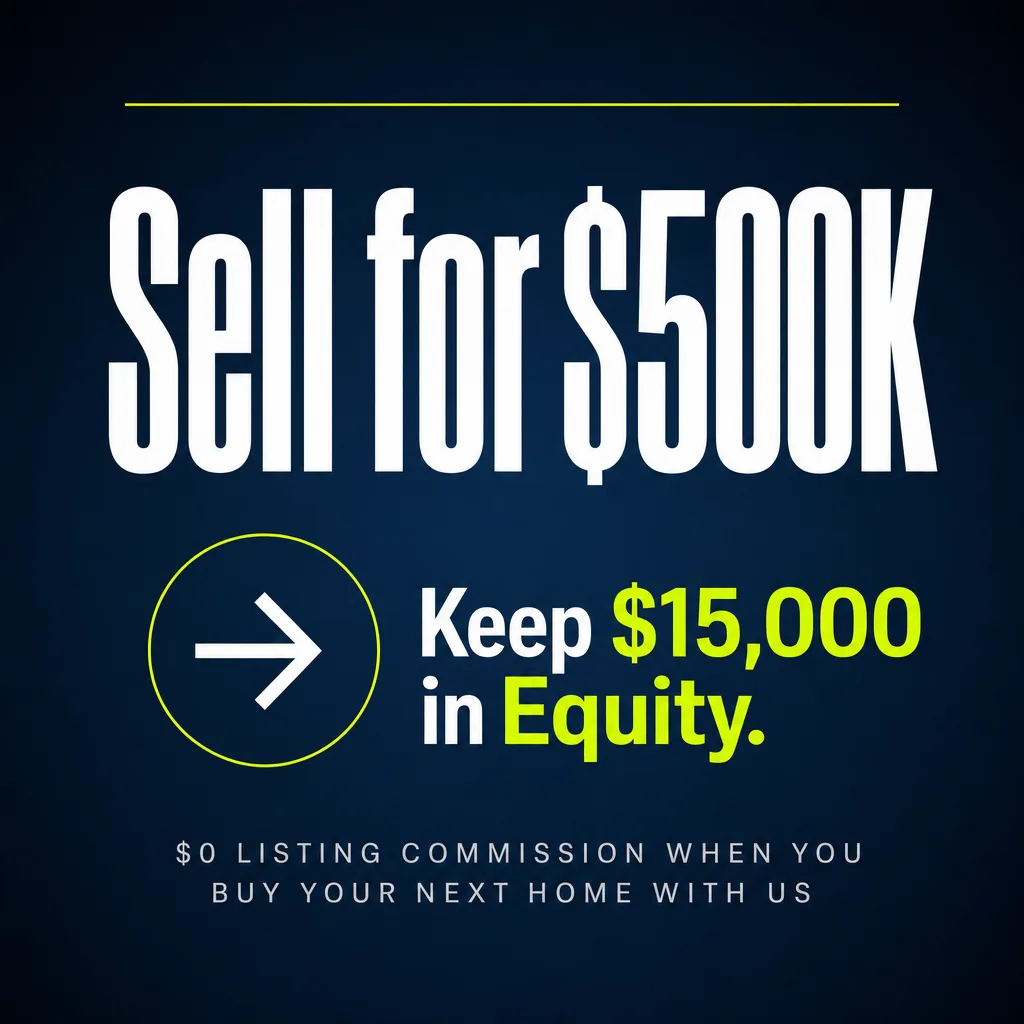
Want the cost-of-waiting math on your specific home? Head to soldzerocommission.com and raise your hand for a free, no-obligation look at your numbers, or book a Zoom with Phil and run the math together.
New to the concept? Start with what Sold Zero Commission is, then dig into the $15,000 commission question and the latest Raleigh market update for the full picture.
Want to dig deeper before you reach out? Walk through how the program works, compare your options on the sell page, or bring your questions straight to the contact page and we will run the numbers on your home.
Real estate commissions are fully negotiable and not set by law. Sold Zero Commission listing fee waivers apply when you list and purchase your replacement home through Phil Slezak Real Estate. Market figures reflect recent public Triangle-area data and can change. Savings figures are illustrative examples, not a guarantee for any specific property.